Imam’s heart is the core of Divine Unity.
|
Subject of the Book: Who Can Connect man to God? |
■ Can man alone realize his own good and evil?
■ Where should mankind go that he needs a guide and an Imam?
■ Who is man’s guide in this realm of being?
■ What is the Imam’s role in social and individual life of people?
■ How to connect to the Imam?
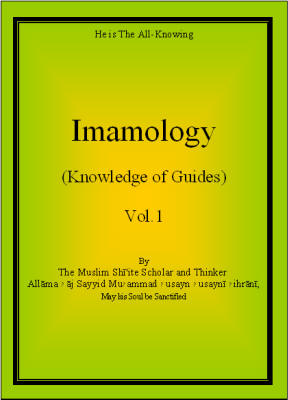
Consisting of 270 lectures covered in eighteen volumes, this collection
includes exegetical, philosophical, narrational, historical, and social
discussions on Imamate and Wilāya in general, and on the Imamate and
Wilāya of Amīr al-Mu’minīn Ali and the Infallible Imams, upon whom be
peace, in particular, which have been presented as lectures in
scholarly-argumentative teaching sessions and adopted from the Qur’an
and the traditions reported by the Shī‘as and Sunnīs, as well as
analytical and critical discourses on Wilāya.
Excerpts from the book:
• Shī‘as are different from others in one tenet; Shī‘as say: Only
the intellect connected to the Supersensible World (malakūt) can guide
human society to felicity; but the others say: intellect alone is
sufficient.
• Becoming an Imam [leader] is conditional upon keeping away from the
carnal self and being annihilated in Infinite Essence of Allah.
• Imam’s replies to queries must bring those possessed with knowledge
and science to their knees.
• Imam must be fully aware all needs and states of people.
• Without an Imam, man would perish in his fantasies.
• God has provided an Imam in any era; he must be sought for and found.
• Getting to know an Imam is subject to comprehending the realities that
are inherent in him.
• Meeting with an Imam must be wished for to attain the Vision of Allah.
• Humanity has no way but accepting the leadership of an Infallible
Imam.
• Comparing the Gnostic knowledge of the Shī‘a Imams with other
ideologies would reveal the superiority and righteousness of the Shī‘a.
• In a Utopia, all people make attempts for the guardianship of Ali,
upon whom be peace.
Topics of the eighteen volumes:
Vol. 1: Generalities and fundamentals of Imamology
Vol. 2: Definition of those possessed of authority (ulu’l Amr)
Vol. 3: Cognition of the Shī‘ism
Vol. 4: Relation of Wilāya to Prophethood
Vol. 5: Reality of Wilāya
Vol. 6 & 7: Al-Ghadīr
Vol. 8: Wilāya of Amīr al-Mu’minīn
Vol. 9: Doctrinal arguments on Al-Ghadīr
Vol. 10: Relationship between the Prophet and Amīr al-Mu’minīn
Vol. 11: Amīr al-Mu’minīn’s judgments
Vol. 12: Amīr al-Mu’minīn’s sciences
Vol. 13: Hadīth of Thaqalayn (tradition of the two weighty things)
Vol. 14: Shī‘ism and authorship
Vol. 15: Al-Sahīfat al-Sajjādiyya (The Psalms of Islam)
Vol. 16 & 17: School of Imam al-Sādiq, upon whom be peace
Vol. 18: Sciences of Imam al-Sādiq, upon whom be peace
View detailed index of:
Vol. 1 - Vol. 2 - Vol. 3 - Vol. 4 - Vol. 5 - Vol. 6 - Vol. 7 - Vol. 8 - Vol. 9 - Vol. 10 - Vol. 11 - Vol. 12 - Vol. 13 - Vol. 14 - Vol. 15 - Vol. 16 - Vol. 17 - Vol. 18.
|
Table of General Concepts
Vol. 1
The necessity of the existing and chaste Imam for the society
The truth and the stages of chastity and the explanation of the main heredity in chastity
The need of chastity and its lack of inconsistency with optional deeds
The meaning of the Imam and the terms of proving the Imamate is true, and its effects
The Imamate is above the prophecy and it is the base of Islam
Seven questions out of the most important of questions of Imamate
The need to follow the most leaned and the necessity of the Imam’s most learnedness
Some of the conditions and the positions of the Commander of the believers (upon him be peace)
The superiority of the Commander of the believers in all cardinal virtues
Vol. 2
The Perfectness of the Commander of the believers (upon him be peace in all virtues)
The opines of the unions of the management on the analysis of the chastity
The Imam is a ‘united-with-the Unity-Status Human and the Qur’an is a guidance by the Imam
The Majority Vote Cannot be the Standard of Choosing the Infallible Imam
Imam Must be the Most Virtuous and have Authority over the Nation
The Meaning of ‘Those is the Authority’ is the Infallible Imams
Vol. 3
The commentary on the Verse: يا ا بَتِ انَّى قَدْ جائَنى مِنَ الْعِلْمِ ما لَمْ يَأْتِكَ فَاتَّبِعْنى اهْدِكَ صِراطاً سَوِيّا
The commentary on the Verse: وَ مَنْ اضَلُّ مِمَّنِ اتَّبَعَ هَواهُ بِغَيْرِ هُدًى مِنَ اللهِ انَّ اللهَ لا يَهْدِى الْقَوْمَ الظَالِمين
The commentary on the Verse: فَلا اقْسِمُ بِالشَّفَقِ وَ اللَّيْلِ وَ ما وَسَقَ وَ الْقَمَرِ اذَا اتَّسَقَ لَتَرْكَبُنَّ طَبَقاً عَنْ طَبَق
The commentary on the Verse: انَّ الَّذينَ آمَنُوا وَ عَمِلُوا الصّالِحاتِ اولئِكَ هُمْ خَيْرُ الْبَرِيَّة
The commentary on the Verse: وَ مَنْ يُطِعِ اللهَ وَ الرَّسُولَ فَأولئِكَ مَعَ الَّذينَ انْعَمَ اللهُ عَلَيْهِمْ مِنَ النَّبِيِّينَ وَ الصِّديِّقينَ وَ الشُّهداءِ وَ الصَّالِحينَ وَ حَسُنَ اولئِكَ رَفيقا
The commentary on the Verse: مَنْ يُطِعِ الرَّسُولَ فَقَدْ اطاعَ الله
The commentary on the Verse: انَّما يُريدُ اللهُ لِيُذْهِبَ عَنْكُمُ الرِّجْسَ اهْلَ الْبَيْتِ وَ يُطَهَّرَكُمْ تَطْهيرا
Vol. 4
The commentary on the Verse: ثُمَّ أَوْرَثْنَا الْكِتَابَ الَّذِينَ اصْطَفَيْنَا مِنْ عِبَادِنَا فَمِنْهُمْ ظَالِمٌ لِّنَفْسِهِ وَمِنْهُم مُّقْتَصِدٌ وَمِنْهُمْ سَابِقٌ بِالْخَيْرَاتِ بِإِذْنِ اللَّهِ ذَلِكَ هُوَ الْفَضْلُ الْكَبِيرُ
The commentary on the Verse: وَيَقُولُ الَّذِينَ كَفَرُواْ لَسْتَ مُرْسَلًا قُلْ كَفَى بِاللّهِ شَهِيدًا بَيْنِي وَبَيْنَكُمْ وَمَنْ عِندَهُ عِلْمُ الْكِتَابِ
The commentary on the Verse … أَفَمَن كَانَ عَلَى بَيِّنَةٍ مِّن رَّبِّهِ وَيَتْلُوهُ شَاهِدٌ مِّنْه
The commentary on the Verse: وَيَقُولُ الَّذِينَ كَفَرُواْ لَوْلآ أُنزِلَ عَلَيْهِ آيَةٌ مِّن رَّبِّهِ إِنَّمَا أَنتَ مُنذِرٌ وَلِكُلِّ قَوْمٍ هَادٍ
Vol. 5
The Commentary on the verse “هُنَالِكَ الْوَلَايَةُ لِلَّهِ الْحَقِّ هُوَ خَيْرٌ ثَوَابًا وَخَيْرٌ عُقْبًا”
The Commentary on the verse “ ”أَلا إِنَّ أَوْلِيَاء اللّهِ لاَ خَوْفٌ عَلَيْهِمْ وَلاَ هُمْ يَحْزَنُون
The Commentary on the verse “ ”النَّبِيُّ أَوْلَى بِالْمُؤْمِنِينَ مِنْ أَنفُسِهِمْ...
The Commentary on the verse “ ”إِنَّمَا وَلِيُّكُمُ اللّهُ وَرَسُولُهُ وَالَّذِينَ آمَنُواْ الَّذِينَ يُقِيمُونَ الصَّلاَةَ وَيُؤْتُونَ الزَّكَاةَ وَهُمْ رَاكِعُون
The Commentary on the verse “إِنَّمَا وَلِيُّكُمُ اللّهُ وَرَسُولُهُ وَالَّذِينَ آمَنُواْ الَّذِينَ يُقِيمُونَ الصَّلاَةَ وَيُؤْتُونَ الزَّكَاةَ وَهُمْ رَاكِعُونَ”
Vol. 6
The Interpretation of the verse: “يا ايها الرسول بلغ ما انزل اليك من ربك ...”
The Interpretation of the verse: فاذا امِنتم فمن تمتّع بالعمرةِ الي الحج...
The Interpretation of the verse: … و اذ بوانا لابراهيم مكان البيت
Vol. 7
Vol. 8
Taking the lead before the Commands of Allah and His Messenger is the sign of retardation